
Permanent exhibition
Dinosaurs Unlimited
Experience the dimensions of the giants of the Mesozoic!
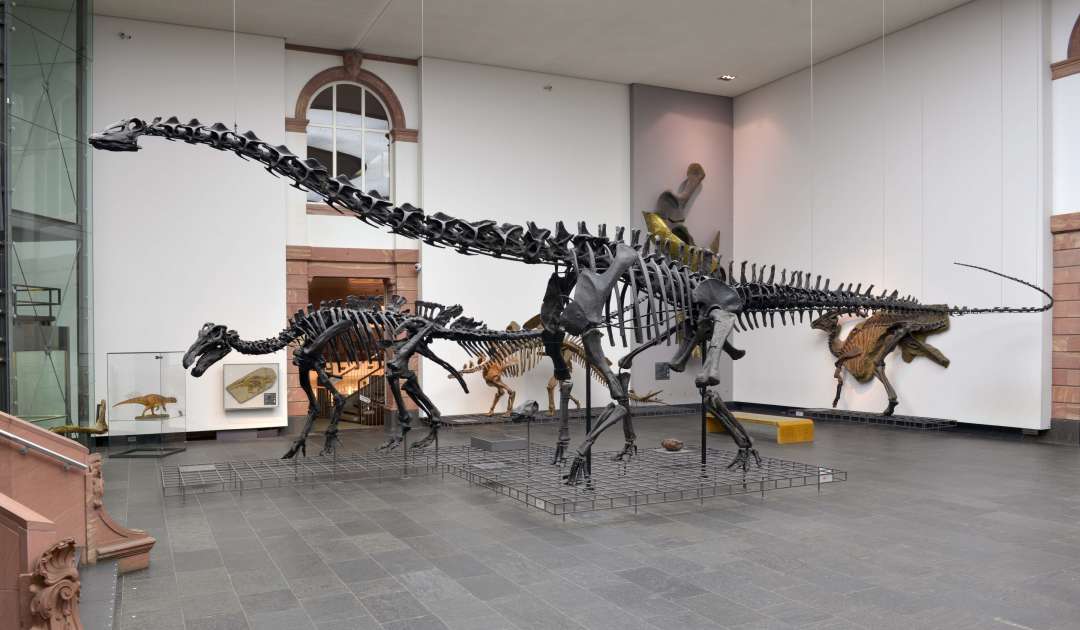
The dinosaurs on display at the Senckenberg Museum did not all live at the same time. The age of the dinosaurs – the earth’s middle era – is divided into three sections: Triassic, Jurassic, and Cretaceous. Our exhibition’s oldest, and sole, representative of the Trias is the Plateosaurus.
Dating from the era that followed – the Jurassic period – are the huge herbivorous sauropods such as the imposing long-necked Diplodocus in the centre of the dinosaur room. Yet some of these giants could get to be even bigger, as shown by our Supersaurus leg. These four-legged titans lived some 150 million years ago. The youngest period in the earth’s middle age – Cretaceous – is characterized by the enormous diversity of the dinosaur species. It was at this time, for example that the legendary Tyrannosaurus rex and our museum’s own “heraldic” symbol, the three-horned dinosaur Triceratops, roamed the earth.
The avian dinosaurs on display also date back to the Cretaceous period, which ended more than 66 million years ago with a mass extinction of species.