Permanent exhibition
Deep Sea and Marine Research
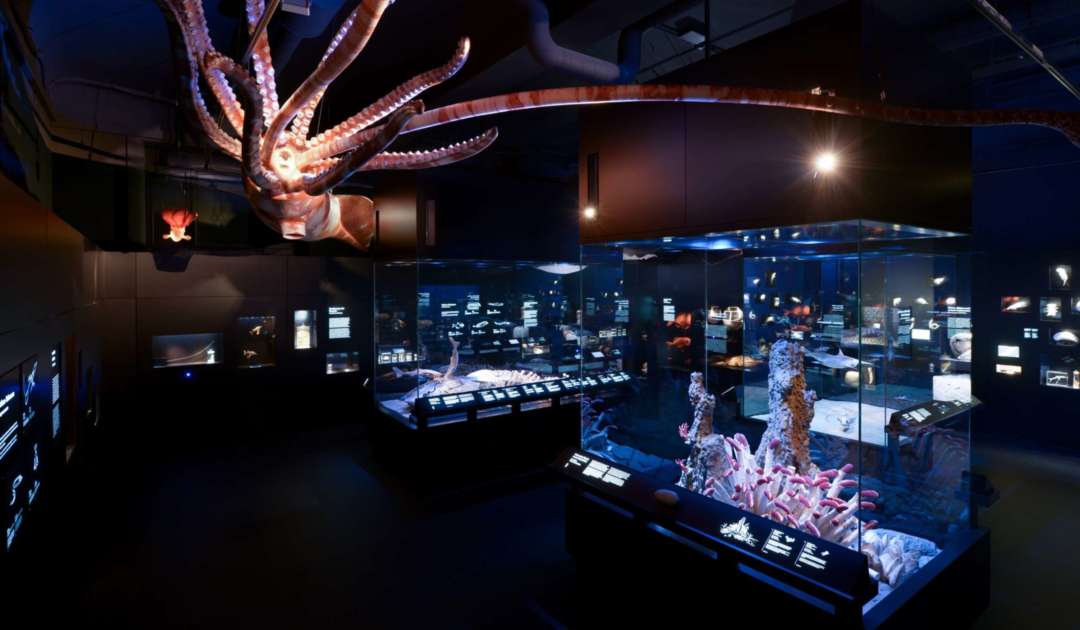
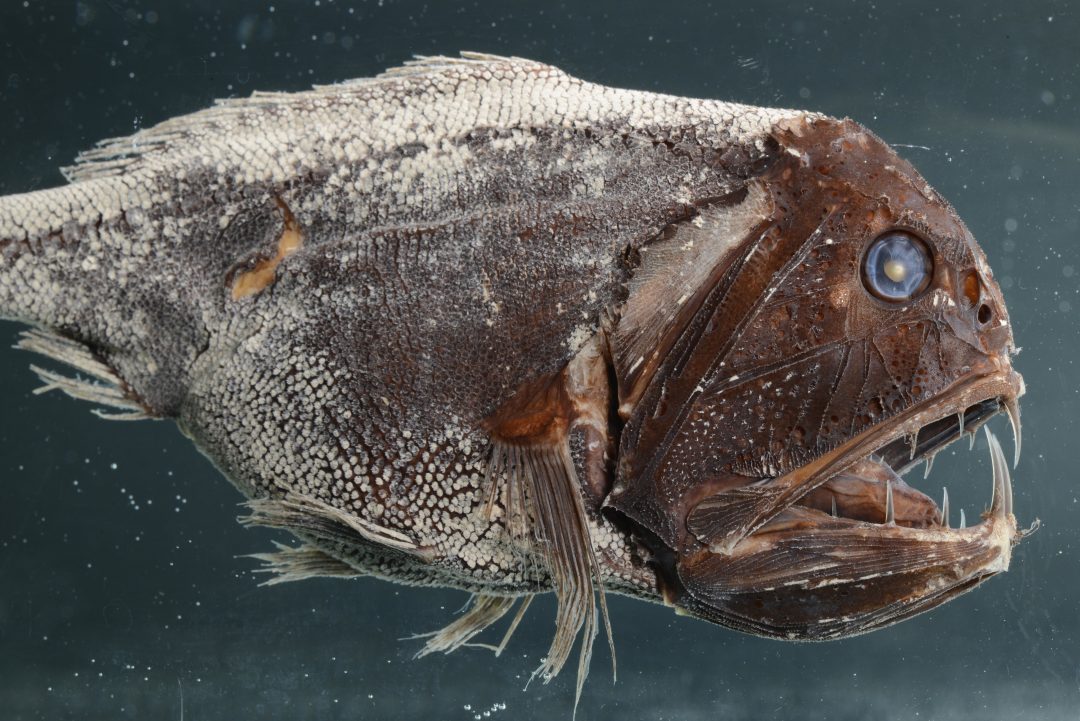
The deep sea is the world’s largest biotope – almost 50 percent of the earth’s surface area are found at depths below 1,000 meters in the ocean. Despite the extreme conditions, the deep sea is home to many organisms who have adapted in multiple ways: from giant squid and pelican eels to bluish-green, bioluminescent brittle stars and the “alarm jellyfish.” Magical, eerie, and fascinating – these are attributes that describe this alien universe. The new exhibition halls offer visitors an opportunity to experience the deep sea using all their senses.
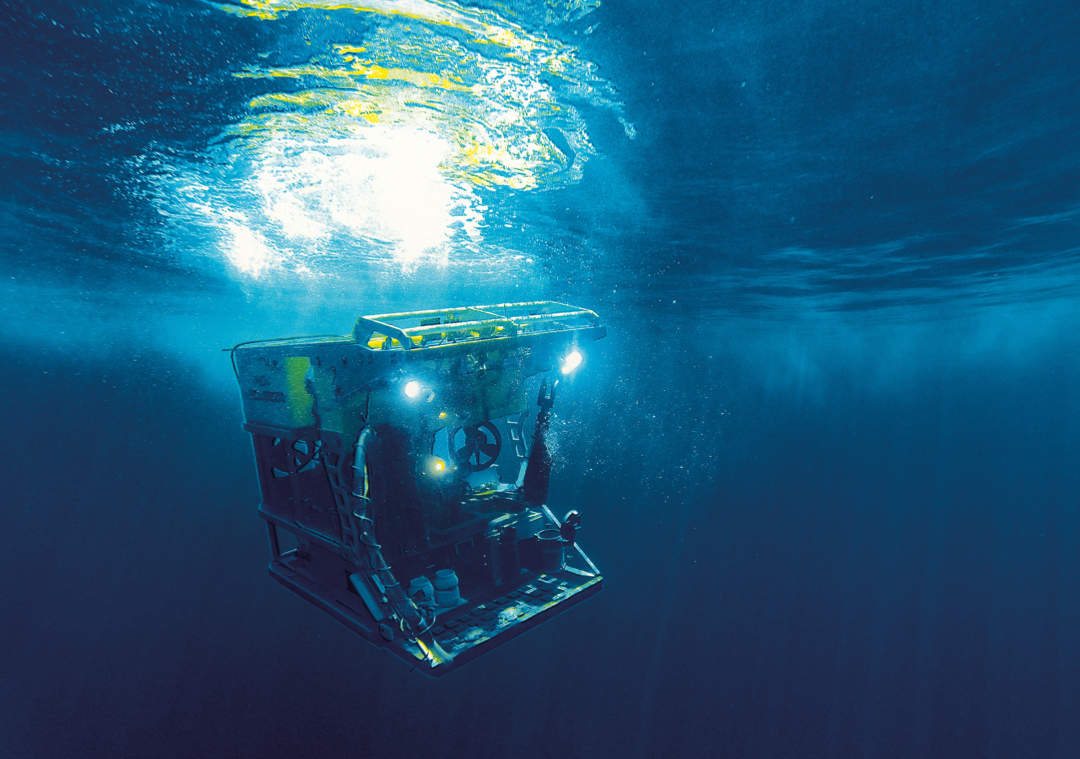
With the aid of autonomous vehicles and robots, scientists explore the vastly unknown world of the deep sea, revealing astonishing discoveries. Crewed dives into the deep sea are costly, labor-intensive, and dangerous. Therefore, deep sea researchers usually deploy unmanned vehicles. These devices are known as “Remotely Operated Vehicles” (ROV) or “Autonomous Underwater Vehicles” (AUV). A new topical exhibition hall presents marine research and marine technology. Here, visitors have an opportunity to act as pilots of a deep-sea robot and set out on a virtual dive into the ocean’s abyss. In addition, the exhibition showcases the equipment used to explore the seas and to retrieve marine organisms as well as the remarkable results achieved by marine researchers. Last but not least, human impact on the oceans is being addressed.
We thank our supporters, who made this exhibition possible:
Orenstein Family
DZ BANK Stiftung
Members of the Senckenberg Society
Scientific partner GEOMAR Helmholtz Center for Ocean Research in Kiel
The GEOMAR Helmholtz Center for Ocean Research in Kiel is one of the world’s foremost institutions in the field of marine research. The institute’s main focus is the study of the chemical, physical, biological, and geological processes in the oceans and their interactions with the sea floor and the atmosphere. With this wide range, GEOMAR covers a unique spectrum in Germany.
To study and understand nature with its unlimited diversity of living creatures and to preserve and manage it in a sustainable fashion as the basis of life for future generations – that has been the goal of the Senckenberg Gesellschaft für Naturforschung (Senckenberg Nature Research Society) for the past 200 years. This integrative “geobiodiversity research” and the dissemination of research and science are among Senckenberg’s primary tasks. Three nature museums in Frankfurt, Görlitz, and Dresden display the diversity of life and the earth’s development over millions of years. The Senckenberg Gesellschaft für Naturforschung is a member of the Leibniz Association. The Senckenberg Nature Museum in Frankfurt is supported by the City of Frankfurt am Main as well as numerous other partners. Additional information can be found at www.senckenberg.de.